 LiveLingo
1. The Problem With Most Japanese Apps
That's the dirty secret of the speak Japanese app market. The vast majority of these programs function as reading tests disguised in a speaking costume.
2. Why Speaking Is the Hardest Skill to Build in Japanese
Speaking Japanese forces your brain to generate grammar particles from scratch. You have no surrounding context to lean on, and no time to think. Listening, you can guess from tone and situation. Speaking, you either know が vs. を or you freeze.
Fear keeps adult learners completely silent during conversations, and mastering pitch accent (the rising and falling tone pattern that distinguishes words with identical sounds) is vital because incorrect intonation changes a word's meaning entirely.
Saying a word with the wrong pitch means you asked for a bridge instead of chopsticks.
Confusion ensues immediately.
If you want to learn Japanese speaking effectively, you need tools built exclusively for vocal output.
3. What Is the Best App for Practicing Speaking Japanese?
The Short Answer: Pimsleur is the best app for speaking Japanese overall. Its audio-first methodology, native speaker modeling, and spaced-repetition drills force vocal output from day one. For live conversation, iTalk connects you with native speakers directly. Beginners benefit most from structured audio lessons; intermediate learners gain more from real conversation practice.
4. Top Japanese Speaking Apps Compared: Features, Pricing & Methods
Thing is, comparing these platforms requires looking past their slick marketing copy. I pulled together the key specs on each platform so you can compare them without reading seven separate review pages. Several apps have added AI conversation modes in recent updates, so we've noted where those features affect speaking practice quality.
| App Name | Price/Month | Speech Recognition* | Lesson Type | Native Audio | Community Features | Best For |
|---|---|---|---|---|---|---|
| Pimsleur | Varies† | Basic AI | Audio Drills | Yes | None | Beginners |
| iTalk | Varies† | Human | Live Video | Yes | Tutor Market | Intermediate |
| Japanese - L&S | Free (IAP)† | None | Shadowing | Yes | None | Repetition |
| Speechling | Varies† | Human Coach | Audio Mimic | Yes | Feedback | Pronunciation |
| HelloTalk | Free tier† | None | Text/Voice | Yes | Exchange | Networking |
| Rosetta Stone | Varies† | Basic AI | Visual Match | Yes | None | Vocabulary |
| Duolingo | Free tier† | Basic AI | Gamified | Synth** | Leaderboards | Casual |
Table Notes: *Speech Recognition: "Human" means a real coach reviews your audio. "Basic AI" means pattern-matching ASR. "None" means no feedback at all. **Synth: Duolingo uses synthesized text-to-speech rather than recorded native speakers. †Pricing and free-tier availability change frequently. Verify directly with each platform before purchasing.
5. How Accurate Is AI Pronunciation Feedback for Japanese?
Speech recognition technology still struggles heavily with pitch accent detection. Most automatic speech recognition engines utilize training data heavily skewed toward American-accented Japanese learners.
Run the same sentence through Duolingo's mic check and Google's speech API. You'll often get a pass from both even when a native speaker would wince at your pitch pattern. Duolingo compounds this problem by using synthesized speech rather than recorded native speakers, meaning you're training your ear on a robot and then trying to understand a human.
If you want to sound natural, read our Japanese pitch accent guide instead of trusting AI grades blindly.
Pimsleur Japanese: Audio-First Methodology
Pimsleur Japanese forces you to speak from minute one. The thirty-minute audio format uses structured spaced-repetition speaking drills to build memory.
I ran through Pimsleur Japanese Level 1 over 30 days, doing one lesson per commute. The recall prompts feel genuinely uncomfortable at first. You are expected to produce a full sentence with no visual cues, which feels impossible until it suddenly isn't.
This method prevents you from relying on written romaji. Your ears quickly become the primary instrument for absorbing and reproducing the language's natural rhythm. Read our full Pimsleur Japanese review for deeper insights.
iTalk Japanese: Live Native Speaker Practice
iTalk operates as a tutor marketplace rather than a standalone course. Users schedule personalized video sessions directly with native speakers to receive targeted, real-time conversational guidance and corrections.
Prices vary by tutor and are subject to change; check the platform directly for current rates. Session quality varies a lot depending on the specific instructor's background and teaching methodology. Always filter for tutors possessing documented JLPT teaching experience.
They also offer a language exchange option for free peer practice. This unpaid route works exceptionally well if you already possess solid N4-level grammar knowledge.
Japanese – Listening & Speaking
This app contains a large library of lessons covering daily life and basic greetings. It relies entirely on audio files of native speakers. Learners can quickly toggle a helpful show/hide transcript feature while practicing their pronunciation.
A playlist mode allows for hands-free Japanese listening and speaking practice during commutes. Students preparing for JLPT and NAT tests find this material relevant.
While the application is free with in-app purchases, numerous user reviews highlight several frustrating technical flaws. Ads can pop up mid-sentence.
You absolutely cannot adjust the audio speech speed.
HelloTalk: Community Exchange
HelloTalk provides a strong unpaid tier for networking. The platform connects you with native Japanese speakers wanting to learn English. You trade your native language expertise for their time.
Their voice rooms feature allows group conversations. This dynamic social element replicates unpredictable real-world conversation practice remarkably well.
LiveLingo: The Real-World Companion
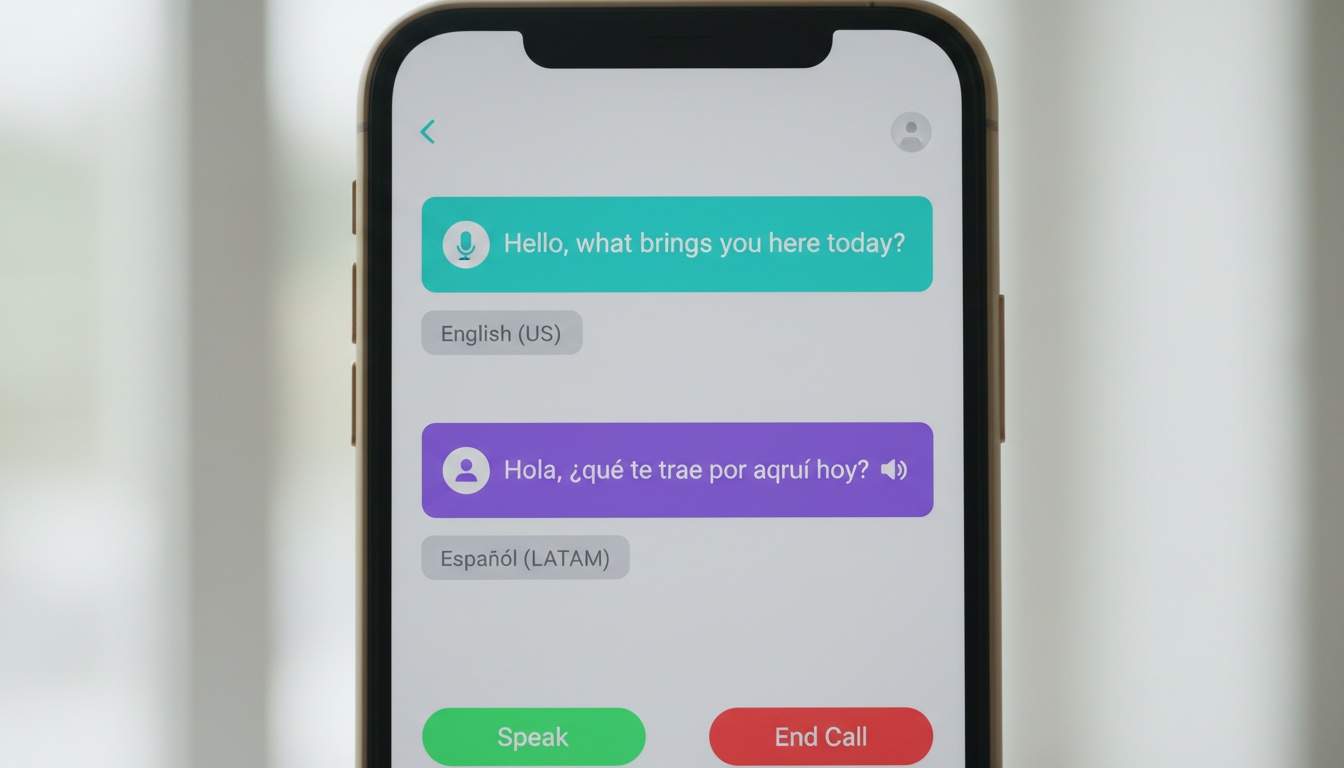
Sometimes you hit a wall during an actual conversation. When your vocabulary fails at the doctor's office, you need immediate backup. LiveLingo is designed as a companion app for two-way or group conversations where audio-only translation falls short.
LiveLingo displays translated text on your phone screen so the other person can read what you mean — even when your pronunciation breaks down completely. You stay in the conversation instead of switching to Google Translate and losing the thread.
It's particularly useful in medical appointments, real estate walkthroughs, or any situation where you need the other person to understand you precisely, not approximately. If that sounds familiar, try LiveLingo free (no credit card required).
6. What Is the Best App to Speak to Japanese People?
The Short Answer: HelloTalk is free, but your language exchange partners aren't trained teachers. iTalk gives you professional tutors who provide structured, real-time feedback. If your budget allows, consistent paid tutoring produces much faster conversational results than relying on unstructured free exchanges with casual peers.
7. Which Language Learning App Is Best for Japanese Overall?
Your ideal choice depends entirely on your primary goal. If your main objective involves reading and writing complex kanji, WaniKani is widely regarded as one of the strongest options available.
However, Pimsleur is the best app for speaking Japanese. It forces vocal output immediately. Auditory learners thrive on its repetitive, structured conversational prompts.
8. Best Japanese Speaking App by Use Case
You must honestly diagnose your needs before downloading anything. What is your current proficiency level? Do you require strict human feedback, or is basic AI sufficient for now?
Best for Absolute Beginners
For absolute beginners, Pimsleur is the call. Its audio-only format means you can't cheat by reading romaji, so you build phonetic memory from the first session. Pair it with the free hiragana chart from Tofugu and you have a complete first-month plan.
Best for Business Japanese
Corporate environments require specific vocabulary and formal register. Rosetta Stone includes business-oriented content that covers professional vocabulary and formal register; verify current module availability directly with the platform, as offerings vary by subscription tier.
That said, no app will teach you the social dynamics of a Japanese office hierarchy. For that, you need a human tutor who's actually worked in a Japanese company.
On the flip side, casual apps completely ignore this formal speech layer. Using casual forms in a Tokyo boardroom will damage your professional credibility immediately.
Advanced Learner Use Cases
Advanced students need specific speaking scenarios. Practicing how to order food or navigate transit systems becomes useless past N3 level. At this advanced stage, learners must transition entirely toward native materials and unscripted tutor debates.
9. Apps Work Best as One Layer, Not the Whole Stack
Apps alone won't get you there — but they work well as one layer in a stack. Pair your daily application usage with a structured textbook like Genki for optimal grammar retention.
Use Anki flashcards to memorize vocabulary, then practice those exact words during your interactive speaking lessons. Check out our JLPT N5 study plan for a complete integration guide.
10. How Long Does It Take to Speak Japanese Conversationally?
The Foreign Service Institute (FSI) estimates (based on data from professional diplomat training) that English speakers need approximately 2,200 hours to reach professional working proficiency in Japanese. That equals roughly six years of studying one hour every single day.
Apps compress early-stage learning brilliantly. Still, they cannot replace deep immersion at intermediate levels. Expect this challenging intermediate plateau phase to consume a considerable amount of your time.
11. The Habit Math: Why 15 Minutes Daily Beats a Weekend Binge
Shadowing native content alongside your Japanese speaking exercises builds muscle memory. Real-world conversation practice solidifies what the apps teach you. The critical input-output loop demands that you physically speak the words out loud repeatedly.
15 min/day = 91 hours/year. Two 2-hour weekend sessions/month = 48 hours/year.
Consistency wins by nearly a factor of two.
The Comfort Zone Trap: Why Your 200-Day Streak Isn't Working
Here's the mistake I see constantly. People find one app, get comfortable, and never leave.
Months pass.
Their Duolingo streak hits 200 days and they still cannot order at a restaurant without switching to English. The app became a comfort zone, not a training ground. Speaking to a human breaks that ceiling faster than any algorithm can.
Spaced repetition builds permanent neural pathways. Obsessively chasing grammar perfection instead of focusing on vocal output completely destroys your Japanese language learning momentum. Making mistakes is how you calibrate your pronunciation.
12. Ready to Start Speaking?
Stop researching and start practicing today. If you're a complete beginner, download Pimsleur and commit to 30 days before evaluating your progress.
If you've already got basic phrases down, book one iTalk session this week. Your first session will feel awkward. That's the point. Awkward means you're actually speaking, not just studying.
And when real-world conversations outpace your vocabulary, LiveLingo's free tier offers real-time voice translation as a safety net — check the app for current usage limits. Get out of your comfort zone and open your mouth.
*