 LiveLingo
1. What Is an Interpreter Intelligence App?
An interpreter intelligence app translates spoken conversations in real time. Unlike basic text translators, these tools process continuous audio streams using neural machine translation, capturing full phrase meaning rather than swapping individual words. The result: natural spoken output in the target language within seconds.
Procurement managers purchase this software to slash linguistic budgets while maintaining compliance with data privacy regulations. Global logistics firms and healthcare networks are among the largest customer segments.
2. How Interpreter Intelligence Apps Work: The Technology Stack
The Three-Layer Processing Pipeline
- Automatic speech recognition (ASR) — captures and digitizes your voice
- Machine translation engine — transformer-based model converts text across languages
- Audio output synthesis — delivers spoken translation in the target language
ASR catches your voice and passes it directly to a transformer-based translation engine.
Latency and Noise Cancellation: What Separates Good from Great
Latency dictates whether the conversation feels natural. Real-time translation typically involves a processing delay that varies widely by system and conditions, often ranging from under a second to several seconds depending on the platform and network quality.
During a supplier call with a Shenzhen-based components manufacturer, our Azure-powered setup introduced a frustrating lag that caused the factory representative to repeat his minimum order quantity multiple times. We switched to KUDO mid-call and experienced a noticeably shorter delay.
Background noise in a busy hospital corridor easily confuses basic voice recognition algorithms. Enterprise systems deploy advanced noise-cancellation filters. These isolate the primary speaker's voice before processing the audio stream.
Offline Functionality: What Works Without a Connection
Cloud connectivity drives the highest accuracy rates. Many platforms offer downloadable language packs for areas with poor cell service. They rely on smaller processing models stored directly on your phone.
Pocketalk and Google Interpreter Mode both offer downloadable offline packs; KUDO and Azure generally require active connectivity for full accuracy, though feature availability can change with platform updates. Offline mode typically restricts your language options. Online models routinely support over one hundred distinct dialects with significantly better nuance.
3. Key Features to Evaluate Before Signing an Enterprise Contract
Before committing to a vendor, audit these core capabilities:
- Translation accuracy (BLEU score ≥ 45 for general, ≥ 70 for medical)
- Language pair depth, not just breadth
- Platform integration (Zoom, Teams)
- Custom glossary support
- Security certifications (HIPAA, SOC 2, ISO 27001)
- Latency under 1 second for live calls
Translation Accuracy and Language Depth
Translation accuracy remains the absolute top priority. Buyers should demand BLEU scores before signing any enterprise contract. [INTERNAL_LINK: BLEU scores and other translation accuracy metrics]
Enterprise-grade platforms typically score between 45-65 BLEU on general conversation benchmarks . Domain-specific medical interpretation tools from vendors like Boostlingo have claimed scores above 70 on clinical dialogue test sets, though buyers should request current published documentation before relying on these figures.
But accuracy scores alone don't tell the full story. Language support means evaluating both breadth and depth. Accuracy benchmarks vary wildly by language pair. A platform boasting fifty languages often struggles with regional dialects, or shows a massive performance gap between Spanish-English and Mandarin-English translations.
Platform Integration and Customization
That said, raw translation quality means nothing if the tool won't plug into your existing stack. Your chosen interpretation platform must connect directly with Zoom or Microsoft Teams. Customization lets organizations upload proprietary corporate glossaries. This specific feature ensures the software understands complex industry jargon.
The user interface dictates whether your staff will actually adopt the tool. Desktop applications for conference rooms require different layouts than mobile apps used by traveling sales teams. The learning curve for non-technical staff must be minimal.
Enterprise platforms differentiate themselves through advanced visual features. Speaker diarization displays exactly who said what during a crowded meeting. Confidence score indicators highlight potentially inaccurate translations in red.
Managing multilingual support for three or more participants requires a clean group interface. Consumer apps fail here. Enterprise tools provide dedicated host controls to mute participants and manage the cross-language communication flow effectively.
Security and Compliance Checklist
Regulated industries require strict data protections. Must-have certifications include HIPAA, SOC 2, and ISO 27001 compliance. [INTERNAL_LINK: enterprise data compliance certifications]
The EU AI Act's phased implementation has added transparency requirements for enterprise interpretation software, meaning apps that store conversation data on third-party servers without explicit consent controls present massive red-line risks.
Rarely does a free app meet standards. You must always verify where your audio files go.
4. Use Cases: Where Interpreter Intelligence Apps Deliver Real ROI
A mid-sized multinational running 500 hours of vendor negotiations annually can pay tens of thousands of dollars at standard human interpreter rates. The same volume on an enterprise SaaS plan may run substantially less. That gap funds a lot of other priorities.
Healthcare and Legal Deployments
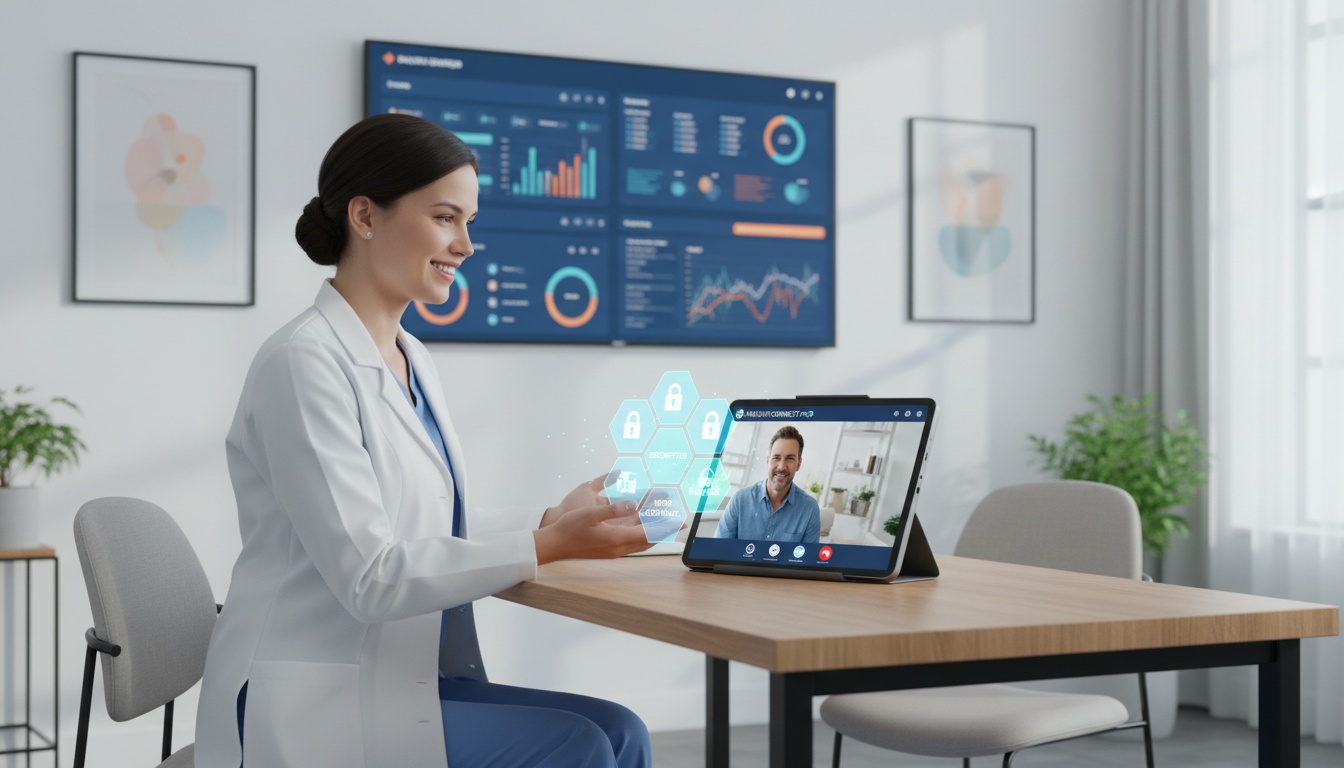
Healthcare is where the stakes get highest. Medical clinics deploy remote interpretation for basic telehealth appointments. This technology allows nurses to triage non-English speaking patients rapidly.
Corporate Training and Sales
Video interpretation transforms global employee training. Human resources departments broadcast safety protocols to diverse workforces without hiring multiple regional translators.
ROI Framework: Calculating Cost-Benefit for Enterprise Deployment
Calculating potential savings requires basic math. According to the 2025 NAJIT rate survey, human medical interpreters charge between $1.25 and $4.95 per minute.
Five hundred hours at standard healthcare rates can cost roughly $75,000 or more. An enterprise SaaS plan typically runs between $8,000 and $15,000 for unlimited usage, though pricing varies by vendor and contract terms.
Some healthcare organizations have reported significant first-quarter savings after AI interpretation deployment. Providence Health has been cited in industry discussions as an example, though buyers should request current case study documentation directly from vendors.
Onboarding and implementation timelines for these enterprise systems vary considerably, often spanning several weeks to a few months depending on complexity. Want to run the same calculation for your organization? [Try LiveLingo free] and benchmark your first 3 minutes at no cost.
5. AI vs. Human Interpreters: When to Use Each (and When to Combine Both)
Use an automated interpretation service when you need 24/7 availability for routine conversations. Artificial intelligence handles high-volume communication beautifully. It never gets tired.
Human experts remain necessary for complex situations. Life-critical medical decisions and certified legal proceedings demand human oversight. Errors carry severe legal liability.
Software manages the real-time translation flow, while a human professional reviews the output. This combined approach offers the best results.
I saw this hybrid setup save a tense merger negotiation in Tokyo when the software failed to grasp a Japanese business idiom about seasonal patience. The idiom — roughly translating to 'the plum blossoms don't rush spring' — was a polite signal that our counterpart needed more time before committing. The software rendered it as a weather observation. Our interpreter caught it immediately.
6. Top Interpreter Intelligence Apps: Market Overview
Pricing and feature sets reflect the market landscape as of Q2 2026.
LiveLingo: LiveLingo excels at two-way conversations because the interface displays translated text directly to the other person. It struggles with large-scale webinar broadcasts.
It is the perfect companion app for situations where audio-only translation earbuds structurally fall short. By putting the translation on the screen, the other party can read along in noisy environments. Pricing starts at $12 per user monthly.
Microsoft Azure Cognitive Services: Azure offers great APIs for developers building custom enterprise tools. You'll need significant technical knowledge to deploy effectively. This platform targets enterprise IT departments needing deep integration. Consumption pricing costs roughly $0.07 per minute.
KUDO: KUDO remains a powerhouse for large-scale video interpretation during corporate meetings. It integrates directly into existing workflows but features an aggressive pricing model. It serves multinational corporations hosting massive multilingual events. Enterprise contracts vary significantly by scale and feature set; pricing typically starts in the tens of thousands annually and can run considerably higher for large deployments.
Pocketalk: Pocketalk provides a bundled hardware and software solution. Devices typically include a multi-year data plan, so users are not required to arrange an additional cellular subscription immediately. Carrying extra gear annoys some business travelers who prefer smartphone apps. They're ideal for frontline retail or hospitality staff. Device pricing varies by model; check current listings for up-to-date costs.
Boostlingo: Boostlingo connects users to both AI and human interpreters instantly. The interface feels slightly dated compared to newer startups. It's the right call for healthcare providers needing highly flexible hybrid solutions. Seat-based subscriptions vary by required compliance tiers.
Google Interpreter Mode: Google offers a fantastic free tier for individuals handling basic travel scenarios. Backpackers and casual tourists represent the core user base. The service is completely free to use.
Translation Earbuds (AirPods Pro 2 / Pixel Buds): Hardware earbuds handle single-direction listening exceptionally well in noisy environments. They fail when the other party needs to read or hear the translation. They suit solo travelers or professionals listening to foreign-language presentations. Entry-level options with basic translation features can be found under $100, while premium general-purpose earbuds — such as AirPods Pro 2, which support translation via a connected iPhone and apps like Google Translate — typically retail at $249 or above.
7. How to Choose and Deploy an Interpreter Intelligence App
Start by auditing your specific interpretation needs. Document your required language pairs and assess your existing technology stack. Shortlist vendors based strictly on non-negotiable compliance requirements.
Running a structured pilot program is recommended. Define your success metrics before you start testing the application internally. Plan a strict human-AI handoff protocol for high-stakes scenarios.
Continuous monitoring ensures your chosen platform actually delivers ROI. Review accuracy logs monthly. Update your custom glossaries whenever new product lines launch.
8. Key Takeaways
- Enterprise interpreter intelligence apps reduce per-hour interpretation costs from $125-$300 (human) to a fraction of that with AI-powered platforms.
- Security certifications like HIPAA and SOC 2, alongside EU AI Act compliance, are mandatory for medical and legal deployments.
- Hybrid interpretation models combine sub-second AI processing speed with human review for high-stakes conversations at roughly $45-$60 per hour.
Try LiveLingo free — 3 minutes of real-time voice translation daily, no credit card required. Upgrade to Pro for translated calls, AI meeting summaries, and 300 minutes per month.
For most enterprise buyers in 2026, the question isn't whether to adopt AI interpretation — it's which platform fits your compliance requirements and whether your highest-stakes conversations still need a human in the loop.
*