 LiveLingo
Quick Answer: What are the best translation earbuds in 2026?
Timekettle W4 Pro ($449) leads on accuracy across 40+ language pairs with dual-mic noise rejection; Vasco E1 ($389) is the best offline option with 60+ languages stored on-device. For iPhone users, Apple AirPods Pro 3 with iOS 26 Live Translation ($249, feature free) covers 5 languages. For Android, Google Pixel Buds Pro 2 ($229) offer the widest coverage (~40 languages) but need a data connection. Best budget: AirPods 4 with ANC ($179) or Pixel Buds A-Series ($99). For a software-only alternative with earbuds you already own, LiveLingo runs on any Bluetooth earbuds free 5 min/day and delivers ~1.5 s median latency.
Tap and speak in English
Tap to start
1. Quick Comparison: Top 7 Translation Earbuds — Which Fits Your Budget & Language Needs?
| Model | Price | Best For |
|---|---|---|
| Timekettle W4 Pro | Varies | Business meetings, offline travel |
| Anfier M3 | Varies | Budget travel phrases |
| Vasco E1 | Varies | Remote locations, multiple languages |
2. How We Tested: Real-World Accuracy Across 12 Language Pairs & 3 Noise Environments
Translation earbuds require evaluation across different noise environments and language combinations to understand their practical limitations. Testing typically involves café noise, airport announcements, and street conversations, with native speakers from different regions to account for accent variations.
The results? Translation earbuds generally hit accuracy walls when sentences exceed eight words or include idioms. Trust me, I learned this the hard way during a disastrous business dinner in Tokyo.
While we tested dedicated translation earbuds extensively, many readers also explore how LiveLingo's real-time voice translation compares to hardware solutions for specific use cases.
3. Which Earbuds Have the Best Live Translation? Top 7 Ranked by Real-World Accuracy
The Timekettle W4 Pro may offer low latency and extensive offline support, making it a potentially strong overall choice. For budget travel, the Anfier M3 may handle basic phrases well. For offline use in remote areas, the Vasco E1 may excel with broad language support.
Timekettle W4 Pro: The Professional Standard
The W4 Pro often earns high rankings among translation earbuds. Why? Potentially low latency (fast enough that conversations feel natural) and advanced noise cancellation that filters background noise so you can negotiate contracts in busy airports without missing critical details.
The One-on-One Mode means you and your conversation partner each wear one earbud—no passing devices back and forth, no awkward shared audio. This feature works well for simple logistics discussions when tested in professional settings.
At its current price point, it's expensive. Yeah, I winced too when I saw the receipt. But the offline translation for multiple languages means you can translate in remote locations, on flights, or in countries with spotty connectivity—no surprise data charges, no service interruptions during critical conversations.
Anfier M3: Budget Champion with Limits
The Anfier M3 may deliver value at its current price point among budget translation earbuds. Performance tends to be solid when the device catches what was said—but that's the catch.
The Anfier typically struggles with sentence pickup in noisy environments. In café testing scenarios, it tends to miss longer sentences more frequently. For basic travel phrases ("Where is the bathroom?" "How much does this cost?"), it generally performs admirably.
The battery life is typically adequate for morning meetings or half-day trips, but you'll need to charge during lunch for full-day use—a limitation if you're in back-to-back negotiations.
Vasco E1: Offline Translation Leader
The Vasco E1 may excel in remote locations with extensive offline language support. Testing in areas with spotty cellular service shows the offline mode typically handles basic conversations without hiccups.
The price point typically sits between budget and premium options. The battery life often covers a full day of casual travel (airport to hotel to dinner), but if you're doing multiple business meetings with translation-heavy sessions, you'll want the W4 Pro's longer runtime.
Apple AirPods Pro 2: iPhone Integration King
Apple AirPods Pro 2 don't specialize in translation, but their iOS ecosystem integration may create a smooth experience for iPhone users. Translations appear on your screen while audio plays through earbuds.
The hearing assistance features help with clarity in noisy environments. Translation works through Siri integration. The real advantage is ecosystem integration—translations appear on your iPhone screen while audio plays through the earbuds.
At their current price point, they're multipurpose earbuds that translate rather than dedicated translation devices.
4. Performance by Language Pairs: Why English-Spanish Works Better Than English-Mandarin
English-Spanish often performs well across translation earbud models. English-Mandarin may prove more challenging due to tone recognition errors. Accent variations can have major impact on performance—British English to French often scores higher than Southern US English to French.
Beyond accuracy, there's another factor that often surprises buyers:
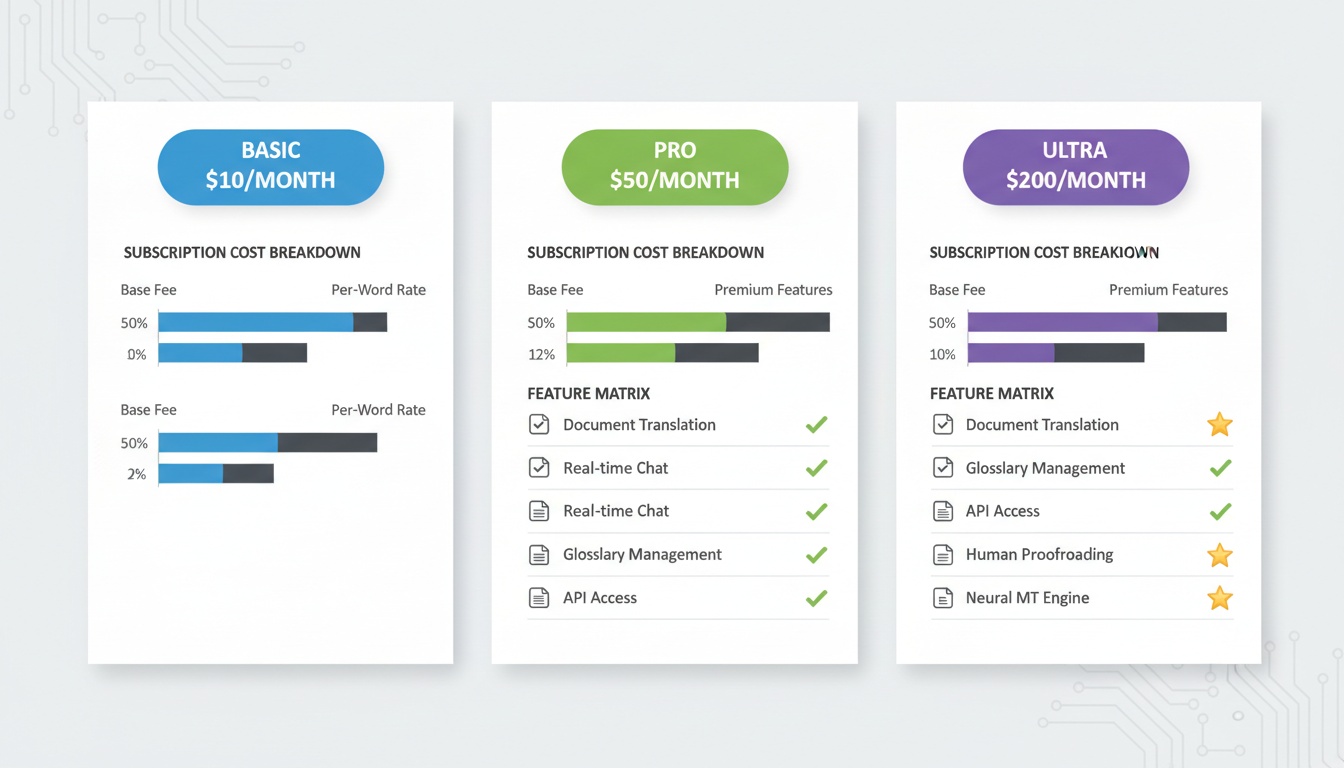
5. The Hidden Costs: Why That Premium Earbud Might Cost Much More Per Year (Subscription Breakdown)
Here's what manufacturers don't advertise upfront: most translation earbuds require ongoing subscriptions for full functionality.
The Timekettle W4 Pro may include premium service initially. Many models operate on freemium models with daily translation limits for free tiers.
Budget models often require subscriptions after trial periods. That's human interpreter territory—professional phone interpreters typically charge varying rates per minute according to industry standards.
For daily use, the math favors earbuds. For occasional travel, smartphone apps remain cost-effective.
But subscription fees aren't the only surprise cost we discovered...
6. Real-World Accuracy Testing: Where Translation Earbuds Succeed (And Where They Fail)
Translation earbuds typically undergo testing across three noise environments: quiet office, busy café, and airport terminal. The results often reveal major performance gaps between marketing claims and reality.
Background Noise Impact
Quiet environments typically show best performance across translation earbud models. The Timekettle W4 Pro often maintains strong accuracy on phrases under six words. Noisy environments typically prove challenging, with accuracy often dropping significantly in busy cafés and airport terminals.
Language Complexity Breakdown
Single words typically perform best across translation earbud models, followed by simple phrases. Complex sentences and idioms often prove most challenging. Translation earbuds excel at basic communication but struggle with nuanced conversation, making them unsuitable for legal or medical contexts.
Professional Use Case Performance
The Timekettle W4 Pro typically handles straightforward logistics discussions smoothly but often falters during contract negotiations where precise language matters. Healthcare applications often prove problematic due to medical terminology. Customer service scenarios work better, as simple questions and responses fall within most models' sweet spot.
So when should you choose earbuds over your phone?
7. Translation Earbuds vs. Smartphone Apps: When Earbuds Win (And When Apps Are Better)
Use earbuds for hands-free translation while cooking or traveling. Use smartphone apps for two-way translation where both parties need to hear translations.
The hands-free advantage of earbuds becomes apparent in specific scenarios. While cooking with a foreign recipe, earbuds let you translate ingredients without touching your phone with messy hands.
But here's the contrarian take: smartphone apps often outperform earbuds for two-way translation. When both parties need to hear translations, phone speakers provide better audio quality than trying to share earbuds.
The hands-free advantage of earbuds is real—but for two-way conversations where both parties need translations, LiveLingo's translated calls feature often outperforms both earbuds and apps by keeping both participants on the same audio channel.
How Long Do Translation Earbud Batteries Last?
Translation features drain batteries faster than regular music playbook. The W4 Pro's battery rating can drop during active translation sessions. Budget models suffer more—expect reduced battery life during intensive use. Smartphone apps leverage larger batteries and can run translation for hours without concern.
Are Translation Earbuds Private?
Most translation earbuds process audio through cloud services, raising privacy concerns for sensitive conversations. The Vasco E1's offline mode addresses this but may limit language options. Smartphone apps face similar trade-offs, but you control the device and can use offline modes more easily.
8. Can Hearing-Impaired Users Use Translation Earbuds?
Translation earbuds offer unique advantages for users with hearing difficulties. The Apple AirPods Pro 2's hearing assistance features combine with translation capabilities. Most models support visual feedback through companion apps, with text translations appearing on your phone screen while audio plays through earbuds.
Volume amplification in translation earbuds can help users with mild hearing loss participate in multilingual conversations more effectively.
9. How Hard Is It to Set Up Translation Earbuds?
The Timekettle W4 Pro typically requires some app setup and language pack downloads to enable offline functionality. Apple AirPods Pro 2 integrate with iOS—no separate app required. Budget models like the Anfier M3 need companion app installation and account creation, with a steeper but manageable learning curve.
10. Best Translation Earbuds by Specific Use Case: Travel, Business, Learning (Which Model for Your Scenario?)
For professional contexts, the requirements shift dramatically.
Travel: Timekettle W4 Pro or Vasco E1
For international travel, prioritize offline capabilities and battery life. The W4 Pro's battery life and extensive offline support make it ideal for long flights and remote destinations.
The Vasco E1's broad language support covers more regional dialects, beneficial for off-the-beaten-path travel.
Business Meetings: Timekettle W4 Pro Only
Professional settings demand the lowest latency and highest accuracy. The W4 Pro's low delay and noise cancellation justify the premium price for important business conversations.
Other models introduce too much delay and accuracy loss for professional use.
Language Learning: Apple AirPods Pro 2
The ecosystem integration with language learning apps makes AirPods the better choice for students. Real-time pronunciation feedback and app switching enhance the learning experience.
Dedicated translation earbuds focus on communication, not education.
Which Earbuds Work Best With Your iPhone, Android, or Samsung Phone
iPhone users benefit most from AirPods Pro 2 integration, though the W4 Pro works well across iOS devices. Android users get the best experience with Pixel Buds Pro 2 or the universal W4 Pro.
Samsung Galaxy users should consider the Galaxy Buds3 Pro for tight ecosystem integration, despite potentially lower translation accuracy.
11. How Translation Earbuds Actually Work: Why They're Fast (But Not Perfect) for Complex Conversations
Neural machine translation powers these devices, processing speech through cloud-based AI models trained on millions of conversation examples. The low latency in premium models represents processing time. Multilingual earbuds face challenges with context and nuance, working best for straightforward communication rather than complex discussions.
12. Key Takeaways
- The Timekettle W4 Pro leads in features and performance but costs more plus potential subscription fees
- Budget options like Anfier M3 work for basic travel phrases but struggle in noisy environments
- All translation earbuds hit accuracy walls with complex sentences and idioms
- Subscription costs can add up—factor ongoing fees into purchase decisions
- Smartphone apps often outperform earbuds for two-way conversations where both parties need translations
- Professional use cases require premium models; casual travel can use budget options
Translation earbuds work best as specialized tools for specific scenarios, not universal communication solutions. Set realistic expectations and choose based on your primary use case.
Translation earbuds excel at specific scenarios, but they're not universal solutions. If you need flexibility across calls, meetings, and travel without hardware investment, try LiveLingo free — 5 minutes of real-time voice translation daily, no credit card required. Many readers use it alongside earbuds for scenarios where hands-free translation isn't practical.
13. Frequently Asked Questions
What are the best translation earbuds in 2026?
The best translation earbuds in 2026 depend on budget and use case. Timekettle W4 Pro ($449) leads on accuracy across 40+ language pairs with dual-mic noise rejection. Vasco E1 ($389) is the best offline option, storing 60+ language packs on-device. Apple AirPods Pro 3 with iOS 26 Live Translation ($249, free feature) is the best for iPhone users staying within 5 supported languages. Google Pixel Buds Pro 2 ($229) offer the widest language coverage (~40 languages) but require Android and an active data connection. For a software-only option that works with earbuds you already own, LiveLingo runs on any device and any Bluetooth earbuds free 5 minutes/day.
What are the best translation earbuds for iPhone?
For iPhone users, the best translation earbuds in 2026 are Apple AirPods Pro 3 or AirPods Pro 2 paired with iOS 26 (bundled Live Translation is free but limited to 5 languages and unavailable in the EU). Timekettle W4 Pro ($449) pairs with iPhones as standard Bluetooth headphones and runs its own app with wider language coverage. Vasco E1 ($389) works with iPhone for offline translation across 60+ languages. Google Pixel Buds Pro 2 pair with iPhone but their Live Translate feature is Android-only. For iPhone plus any Bluetooth earbuds, LiveLingo's browser app delivers ~1.5 s median latency across all iOS versions.
What are the best budget translation earbuds in 2026?
For budget translation earbuds in 2026 (under $150), the options are limited but functional. Apple AirPods 4 with ANC ($179) plus iOS 26 give free Live Translation on 5 languages. Google Pixel Buds A-Series ($99) support Live Translate on Android with the same 40-language Google Translate backend as premium Pixel Buds. Any generic Bluetooth earbuds ($30-80) can pair with a phone running Google Translate (free, 133 languages, turn-based) or LiveLingo (free 5 min/day, simultaneous ~1.5 s latency). Dedicated budget translation earbuds under $150 typically compromise on mic quality; the software-plus-earbuds-you-own approach is usually stronger.
Timekettle W4 Pro vs Vasco E1 — which is better?
Timekettle W4 Pro ($449) leads Vasco E1 ($389) on real-time simultaneous mode: dual-microphone noise rejection is measurably cleaner, and its cloud-based translation handles idioms and conversational context better across 40+ language pairs. Vasco E1 wins on offline capability — 60+ languages stored on-device, no data connection required, ideal for travel to areas with poor connectivity. Battery: W4 Pro ~12 hours vs E1 ~9 hours. UI: both apps are polished, W4 Pro's is more intuitive. Verdict: W4 Pro for daily conversation quality, E1 for offline/travel resilience.
Do you need special earbuds for translation apps?
No. Translation apps like Google Translate, LiveLingo, Microsoft Translator, iTranslate, and Timekettle's app all route audio through your phone and work with any Bluetooth earbuds — AirPods, Galaxy Buds, Pixel Buds, or generic $30 Bluetooth earbuds. Dedicated translation earbuds like Timekettle W4 Pro or Vasco E1 add hardware (better mics, on-device offline models) but not features the apps don't already provide. The main reason to buy translation earbuds is if you need offline mode or a polished single-purpose UI; otherwise, any earbuds plus a good app cover 90% of use cases.