 LiveLingo
1. How Do AI Translation Earbuds Work?
AI translation earbuds capture speech via microphones, convert it to text using speech recognition, translate the text via AI engines (usually Google Translate or proprietary systems), and deliver translated audio via text-to-speech synthesis. The entire process depends on internet connectivity for most models.
Tap and speak in English
Tap to start
First, built-in microphones capture your speech using advanced speech recognition algorithms. Second, the audio gets converted to text through natural language processing. Third, AI-powered translation engines translate that text into the target language. Finally, text-to-speech synthesis delivers the translated audio to your ears.
However, only select premium models offer meaningful offline translation, and even then, it's typically limited to basic phrases in a handful of languages.
Real-time translation requires bidirectional translation processing. When you speak English and need Spanish, the system processes your input while simultaneously preparing to handle Spanish responses. This dual-channel approach creates the latency issues we'll discuss later.
What Are the Main Translation Modes?
One-to-one translation splits a pair of earbuds between two people. Each person wears one earbud and speaks their native language. The system translates both directions automatically.
Speaker mode turns your earbuds into a personal interpreter. You hear everything in your language while others hear the original audio. Perfect for presentations or lectures.
Listening mode works like having a personal translator whispering in your ear. You hear foreign speech translated into your language, but you respond in the original language yourself.
2. When Do AI Translation Earbuds Fail?
AI translation earbuds typically struggle in several key scenarios: strong accents can significantly reduce accuracy, background noise severely impacts performance, technical jargon often breaks translation engines, and latency can disrupt natural conversation flow. Restaurant environments and professional meetings with industry terminology present particular challenges for these devices.
Here's where marketing materials often oversell capabilities. Testing these devices across various real-world environments reveals performance limitations that manufacturers don't always emphasize.
Beyond accents, background noise severely impacts performance. Some budget models require relatively quiet environments to function effectively. Even premium models can struggle when ambient noise levels become significant.
Technical jargon and industry-specific terminology often challenge translation engines. Conversations involving specialized topics like software development, medical procedures, or financial planning can produce inconsistent results. Simple statements typically achieve better accuracy than longer, more conversational exchanges.
Testing Methodology
Comprehensive testing typically involves multiple language pairs across various environments to assess real-world performance. Standard testing environments include quiet rooms for baseline measurements, restaurants with moderate background noise, and outdoor locations with ambient sound.
Accuracy assessment often involves native speakers evaluating translation quality on standardized scales. Latency measurements track the delay between speech completion and translation delivery.
Common Failure Scenarios
- Restaurant conversations: Background music and ambient chatter significantly impact accuracy across most models
- Professional meetings: Industry terminology can cause translation difficulties
- Casual conversations: Slang and idioms often produce unexpected translations
- Speech recognition delays: Initial portions of statements may be missed during system initialization
The devices record speech, convert it to text, translate the text, and then voice the translation in the desired language. Each step can compound errors in challenging environments.
However, some models perform better than others in specific challenging scenarios.
3. What Are the Best AI Translation Earbuds in 2026?
| Product Category | Typical Price Range | Language Support | Battery (Translation) | Best For |
|---|---|---|---|---|
| Premium Models | Varies by model | Varies by model | Varies by model | International business travel |
| Mid-Range Options | Varies by model | Varies by model | Varies by model | Ecosystem integration |
| Budget-Friendly | Varies by model | Varies by model | Varies by model | Casual travel |
| Software Alternatives | Often free-premium tiers | Varies widely | N/A (uses phone) | Existing earbud owners |
Premium models typically offer the most comprehensive language support and advanced features. These often include proprietary AI engines and specialized conversation modes designed for natural interaction.
Mid-range options often integrate well with specific ecosystems (iOS or Android) but may have more limited language support. Some include additional features beyond translation, such as health monitoring capabilities.
Budget-friendly models provide basic translation functionality at accessible price points. While translation quality may not match premium models, they can handle simple travel interactions effectively.
Software-First Alternatives
For users who already own quality earbuds, software-based translation apps offer an alternative approach. Rather than purchasing new hardware, these solutions provide translation capabilities through existing devices. Many offer tiered pricing with free basic access and premium subscriptions for extended features.
Some software solutions provide visual translation displays on phone screens - functionality that audio-only hardware cannot match. Features like group sharing and transcript export add capabilities beyond what dedicated hardware typically offers.
4. Setup and Compatibility Requirements
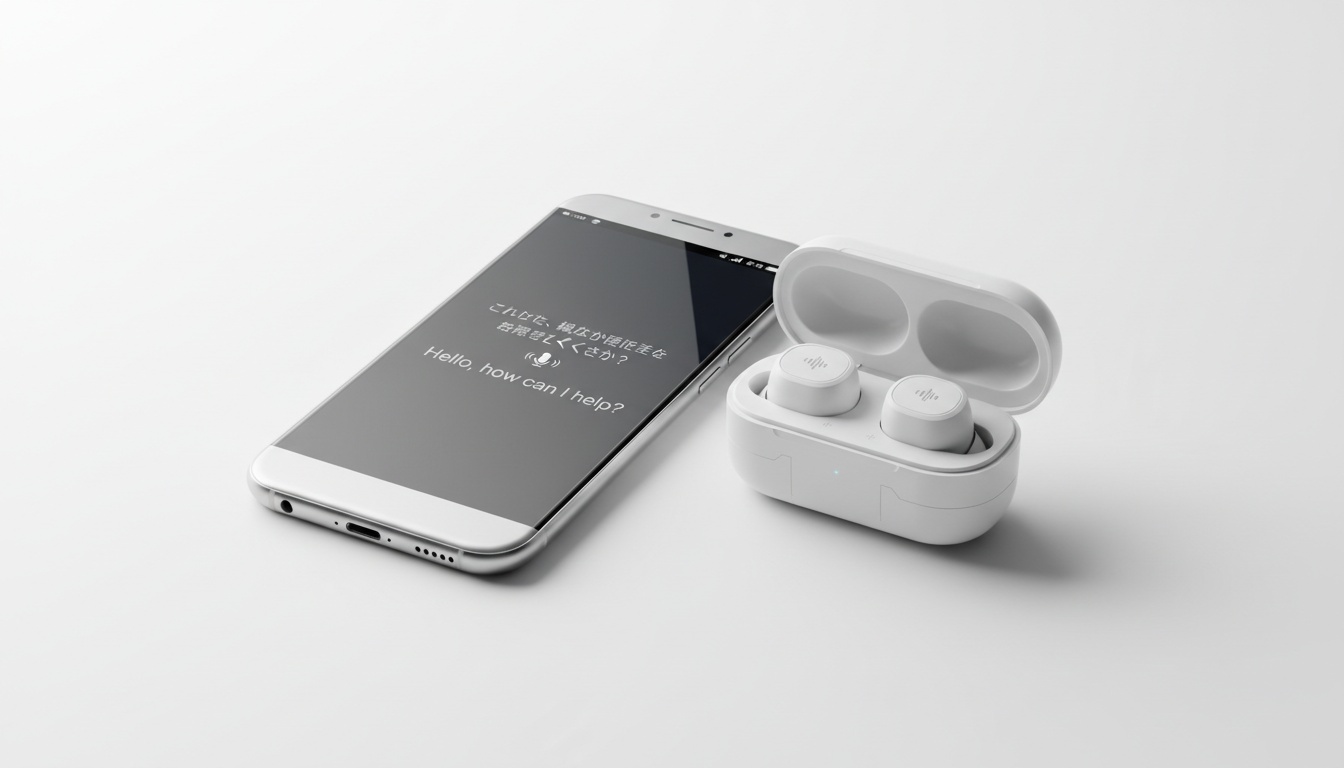
iOS device compatibility for AirPods typically provides the smoothest experience with Apple's ecosystem, while Android compatibility varies by manufacturer and may require specific apps. Bluetooth pairing generally follows standard protocols, though initial configuration complexity varies.
The translation app ecosystem remains fragmented — each manufacturer typically uses different apps with varying interfaces and update schedules. Some require account creation and language pack downloads, while others integrate with existing system functionality.
Setup complexity generally correlates with feature richness. Premium models may require more extensive initial configuration, while budget options often work quickly after unboxing.
5. How Does Real-Time Translation Affect Battery Life?
Real-time translation typically drains batteries faster than music playbook due to continuous processing demands. Premium models often deliver several hours of continuous translation versus longer periods for music playback. Budget models may provide shorter durations during active translation sessions.
Processing latency varies by model and language combination. Common language pairs like English-Spanish often show shorter delays, while less common combinations may experience longer processing times that can affect conversation flow.
6. How Do AI Translation Earbuds Handle Privacy and Security?
Privacy approaches vary significantly by manufacturer — some process data on-device while others send conversations to cloud servers. Premium models often use encryption for data transmission, but cloud storage policies differ substantially. Some companies may retain conversation data for AI training purposes.
Your conversations may travel through company servers for processing, with data encryption varying by manufacturer. Always review privacy policies before setup to understand how your data is handled.
Cultural nuances and context often get lost in translation. These systems translate words rather than meaning. Sarcasm, humor, and cultural references frequently produce confusing or inappropriate results. The ethical considerations extend beyond privacy to cross-cultural communication accuracy.
7. When Are AI Translation Earbuds Worth the Investment?
AI translation device price points vary widely, but total cost of ownership may include app subscriptions, cloud processing fees, and replacement cycles. Premium models often justify their cost for frequent international travelers or business professionals with regular multilingual communication needs.
Break-even analysis depends on usage frequency and specific needs. The learning curve varies significantly between models and use cases. Simple travel phrases typically work immediately, while business conversations may require practice with each model's interface and translation modes.
Professional interpreters still outperform AI translation earbuds for complex business negotiations, medical consultations, and legal discussions. The technology excels at basic communication but falls short of professional-grade interpretation services.
8. Where AI Translation Earbuds Actually Work: 4 Scenarios Where They Shine
International travel scenarios work best with simple, transactional conversations. The devices typically excel with concise sentences and straightforward interactions. They perform well for ordering food, asking directions, shopping, and basic hospitality interactions.
Travel testimonials often highlight success with basic interactions while noting limitations in complex discussions.
Beyond travel, language learning applications provide unexpected value. Hearing pronunciation and practicing conversation flow can help with accent training and vocabulary retention. Some modes allow practice with presentations in foreign languages.
In emergency situations, basic communication capabilities can be valuable. Medical emergencies, transportation problems, and safety issues often require simple, direct communication that translation earbuds can handle reasonably well.
Business meeting limitations become apparent with complex discussions. Technical conversations, contract negotiations, and strategic planning require nuanced communication that current AI translation technology may not provide adequately. They work better for networking and casual business conversations rather than critical meetings.
The integration potential with travel apps, navigation systems, and booking platforms remains largely untapped. Most manufacturers focus on standalone functionality rather than ecosystem integration that could multiply their utility.
9. Key Takeaways
- AI translation earbuds excel at basic travel conversations but often struggle with accents, background noise, and technical terminology
- Premium models typically achieve higher accuracy across multiple language pairs, while budget options provide functional basic translation
- Privacy varies dramatically — some manufacturers process on-device, while others send conversations to cloud servers
- ROI justification typically requires frequent international travel or regular multilingual business communication
- Professional interpreters still outperform AI for complex business, medical, or legal conversations
- Setup complexity and learning curves vary significantly between manufacturers and price points
Ready to test a software-first translation solution? Try translation apps to explore your options.