 LiveLingo
1. Why Does German to English Translation Trip Up Even Advanced Tools?
German's four-case system determines word relationships differently than English word order. Where English relies on subject-verb-object positioning, German uses Nominativ, Akkusativ, Dativ, and Genitiv cases to show meaning.
Tap and speak in German
Tap to start
Take this innocent-looking German sentence: "Dem Mann gibt die Frau den Schlüssel." Direct translation yields "The man gives the woman the key"—but that's backwards. The cases actually mean "The woman gives the key to the man."
How German Compound Words Break Translation Algorithms
German creates monster compound words that make translation algorithms panic. "Verschlimmbessern" (to make something worse by trying to improve it) doesn't exist in English as a single concept.
Because of these challenges, most translation tools either leave these untranslated or break them into confusing fragments. This creates communication gaps that simple bilingual dictionary lookups can't solve.
2. Which Translation Tool Works Best for Your Needs: Google Translate vs DeepL vs Professional Services?
DeepL translation tool for complex German grammar and Google Translate for quick German to English conversion dominate the translation platform landscape, but they serve different needs entirely.
Google Translate excels at speed and supports more languages. For casual German phrases and quick lookups, it works fine. The mobile app's camera feature provides real-time translation of German text, which has saved me countless hours reading German instruction manuals.
DeepL catches grammatical nuances that save hours of manual correction on complex documents. Professional translation rates typically range from $0.15-0.30 per word, and using AI for initial drafts often cuts professional translation costs by 40-60%. For real-time conversations with German speakers, voice translation tools offer a complementary approach to written translation.
| Tool | Best For | Speed | Accuracy | Cost |
|---|---|---|---|---|
| Google Translate | Quick phrases, camera text | Very Fast | Good | Free |
| DeepL | Complex grammar, documents | Fast | Excellent | Free/Premium |
| Professional Human | Legal, medical, business | Slow | Perfect | $0.15-0.30/word |
| Voice Translation | Real-time conversations | Instant | Good | Varies |
What Are the Best Free German Translation Tools?
Google Translate remains the go-to free tool for basic German to English needs. Speed matters more than perfection for casual conversations.
Langenscheidt's online dictionary gives you instant context and usage examples—not just word swaps—so you understand why a translation works, not just what it means.
LEO dictionary includes user-generated examples from native speakers. The forum discussions often explain cultural context that automated translation misses entirely.
When Should You Use Professional Translation Services?
Professional human translation (typically $0.15-0.30 per word) is essential for legal, medical, and business documents where AI errors create costly misunderstandings.
Translate.com handles various file formats including text files, PDFs, and Word documents. Their verified experts catch cultural nuances that automated tools miss completely.
For technical or legal German documents, professional translation prevents costly misunderstandings that could derail partnerships or create compliance issues. We used a certified translator for a German partnership agreement—the AI version would've created legal headaches.
3. What German Grammar Rules Make Translation Difficult?
German's four-case system determines meaning in ways that word-for-word translation completely misses. The case system isn't just academic theory—it completely changes meaning in ways that trip up even advanced translation tools.
Consider articles: "der," "die," "das" all mean "the" in English. They signal different cases and genders in German. Translation accuracy depends on recognizing these patterns, not just word-for-word substitution.
How Articles and Gender Affect Translation Accuracy
German articles change based on case and gender, creating translation ambiguity. "Der Mann" (the man) becomes "dem Mann" (to the man) in Dativ case. Automated tools often miss these relationships.
In subordinate clauses, the verb jumps to the end: "Ich weiß, dass er morgen kommt" becomes "I know that he tomorrow comes"—which sounds ridiculous in English.
What Are German Separable Verbs and Why Do They Confuse Translators?
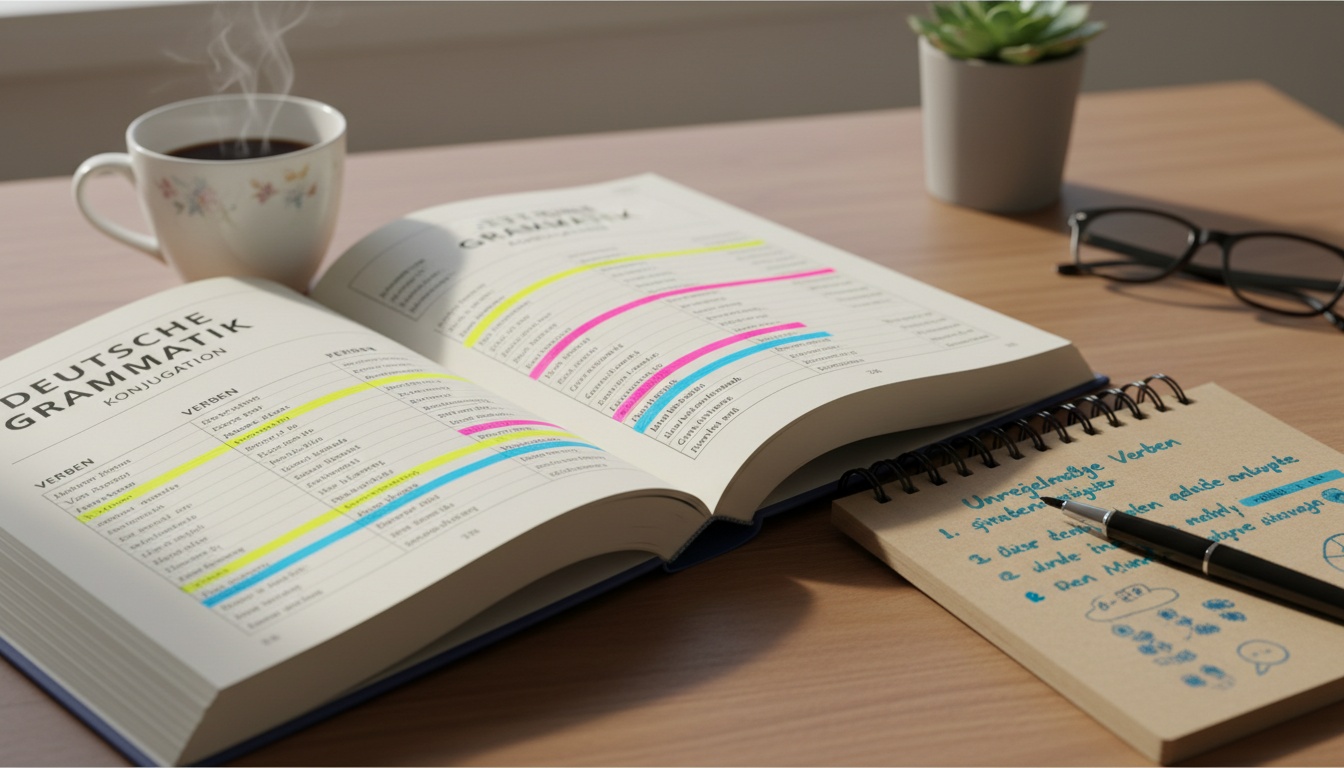
Separable verbs split across sentences. "Aufstehen" (get up) becomes "Ich stehe um 7 Uhr auf" (I get at 7 o'clock up). The prefix separates from the root verb, making automated translation miss the connection.
Most translation tools struggle with this scattered verb construction. The prefix can appear several words away from the root verb, making automated translation miss the connection entirely.
This is where German grammar fundamentals for translation accuracy help translation accuracy.
4. How Does German Pronunciation Differ from English?
Written translation only solves half the communication puzzle. German pronunciation differs dramatically from English, even when words look similar.
"Gift" [ɡɪft] means poison in German, not present. While the pronunciation is very similar to English "gift," the false cognate creates confusion.
"Handy" [ˈhɛndi] (sounds like 'hendy') means cell phone in German, not convenient. "Aktuell" [aktuˈɛl] (sounds like 'ak-too-ELL') means current, not actual.
What Are the Key German Pronunciation Differences?
- German "w" = English "v" sound (Wasser = water)
- German "v" = English "f" sound (Vater = father)
- German "ü" requires lip rounding (Müde = tired)
- German "r" varies by region—can be rolled or guttural (Rot = red)
- German "ei" = long "i" sound (Stein = stone)
- German "ie" = long "e" sound (Liebe = love)
5. What Are the Most Common German to English Translation Mistakes?
False cognates between German and English cause more errors than complex grammar. These linguistic traps catch even experienced translators off guard.
I've seen professional presentations derailed by these seemingly obvious translation mistakes. The German word "aktuell" means current, not actual—but automated tools sometimes miss this distinction.
Literal translation of German idioms produces comedy gold but terrible communication. "Das ist mir Wurst" literally translates to "That is sausage to me," but actually means "I don't care."
What Cultural Context Gets Lost in German to English Translation?
Formal 'Sie' versus informal 'du' distinctions disappear in English, potentially creating cultural offense in business contexts. Regional variations (Austrian, Swiss German) include distinctive vocabulary that may not appear in standard dictionaries.
Austrian German includes regional vocabulary that can challenge even sophisticated translation platforms. Swiss German presents additional challenges for automated tools due to its distinct dialectal features.
6. Your Translation Checklist: How to Verify Accuracy Before Sending Critical Documents
Accurate German translation requires matching the tool to your use case. Casual conversations need speed (Google Translate). Business documents need accuracy (DeepL + human review). Technical manuals need industry-specific terminology. Always verify numbers, dates, and proper nouns separately.
For Casual Conversations and Social Media
- Copy the German text into Google Translate for speed
- Check unfamiliar words in Langenscheidt dictionary
- Read the English output aloud to catch awkward phrasing
- Adjust formal language to match casual English tone
For Business Documents
- Use DeepL for initial translation of the full document
- Cross-reference technical terms with industry-specific dictionaries
- Verify numbers, dates, and proper nouns separately
- Have a native German speaker review critical sections
- Consider professional human review for contracts or legal documents
For Technical Manuals
- Identify technical terminology before starting translation
- Use specialized German-English technical dictionaries
- Maintain consistent terminology throughout the document
- Test translated instructions with actual procedures
- Create a glossary for future reference
What Quality Control Techniques Improve Translation Accuracy?
- Read translation aloud to catch rhythm/flow problems
- Verify numbers, dates, proper nouns separately
- Use industry-specific dictionaries for technical terms
- Have native speaker review critical sections
- Create glossary for future reference
Read the translation aloud to catch rhythm and flow problems that silent reading misses. German's formal tone often translates into overly stiff English that sounds robotic.
Check numbers, dates, and proper nouns separately—these frequently get mangled in automated translation. A German date format "15.03.2026" might become "15/03/2026" or "March 15, 2026" depending on the platform.
7. How Can You Improve Translation Accuracy Beyond AI Tools?
Translation tools work better when you understand basic German grammar patterns. Learning the four cases improves your translation accuracy dramatically.
Use translation mistakes as learning opportunities. When DeepL produces awkward English, dig into the German grammar rules that caused the confusion. This builds intuition for spotting future translation errors.
German pronunciation guides help with verbal communication that written translation can't address. Many German words look similar to English but sound completely different.
When Do You Need Professional Human Translation?
Legal and medical German documents require certified human translators, not AI translation tools. The stakes are too high for automated errors.
Warning: Many institutions won't accept AI-translated official documents. Technical translation needs industry expertise that general translation platforms lack.
Automotive engineering terms have specific German-English conventions that generic tools miss. Business contracts should always get human review, even after AI translation.
For conversations that need immediate translation without waiting for professional services, real-time voice translation bridges the gap between AI tools and human translators.
Cultural business practices embedded in German language don't translate directly to English business contexts.
8. Key Takeaways
- Multiple translation tools provide better verification than single-platform reliance
- German's case system and compound words create the biggest translation challenges for AI tools
- False friends between German and English cause more errors than complex grammar
- Professional human translation remains essential for legal, medical, and business documents
- Basic German grammar knowledge improves your ability to spot and fix translation errors
- Cultural context often gets lost in automated translation and requires human interpretation
- Pronunciation differences matter as much as written translation accuracy
Translation technology keeps improving, but understanding why German grammar breaks automated tools gives you the edge. The combination of AI speed and human insight produces the most reliable results—especially when stakes are high.
Explore how voice translation complements written translation tools — LiveLingo offers real-time conversation support when documents aren't enough.