 LiveLingo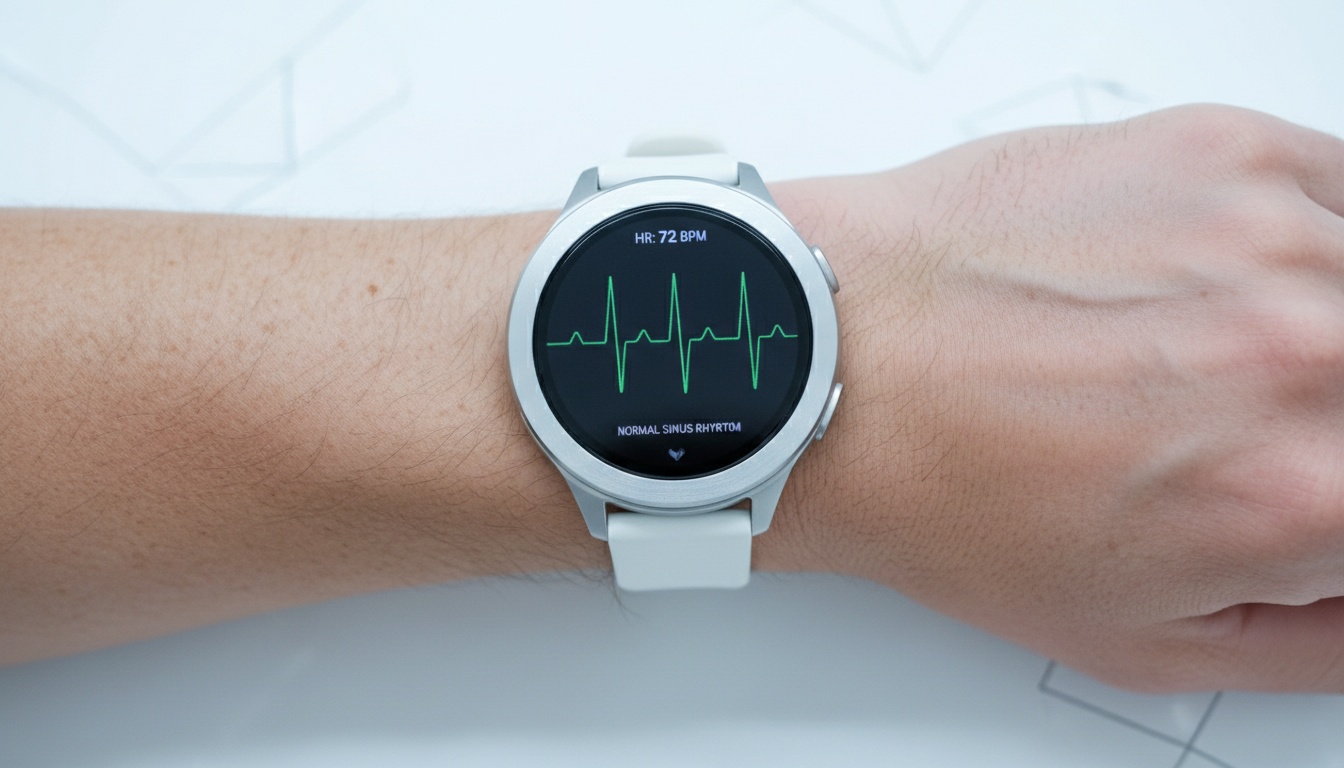
1. What Is an ECG Interpreter App and How Does It Work?
An ECG interpreter app is software that translates raw electrical signals from a wearable electrode into readable cardiac waveforms, flagging potential arrhythmias like AFib. It is the analytical layer that makes a smartwatch clinically meaningful. Without it, you have electrical noise, not a diagnosis.
Most software stays in fitness gadget territory. ECG interpreter apps are the exception. They cross into regulated digital therapeutics.
Hardware captures the signal when your fingers touch the electrodes. Analog signals travel through a digital converter before the software as a medical device (SaMD) analyzes the output.
Still, people constantly confuse the physical smartwatch hardware with the actual cardiac monitoring app doing the heavy diagnostic lifting in the background. Consumer tools sit at completely opposite ends of the clinical spectrum from professional telemedicine software.
A [portable ECG devices for home use] prioritizes simple normal-or-abnormal classifications. Clinical platforms provide raw data feeds for cardiologists to review.
2. How ECG Interpreter Apps Detect Heart Conditions
These algorithms analyze specific waveform characteristics to determine your baseline cardiac health. They measure [heart rate variability monitoring metrics] while actively searching for distinct P-waves and checking QRS complex morphology. These specific data points allow the system to map out potential irregularities.
What the Algorithm Is Actually Looking For
Missing P-waves are the primary target. Actually, they look for the chaotic electrical baseline that replaces them during an active episode.
But what happens when the algorithm encounters a premature ventricular contraction? The system usually flags this anomaly as an unclassified reading rather than a specific arrhythmia detection.
High sensitivity means you're less likely to miss a real AFib episode. This is potentially the difference between early treatment and a stroke. Sensitivity and specificity ultimately dictate exactly how often these digital tools get the medical diagnosis right.
High specificity is the harder problem — because a healthy 28-year-old getting a false positive at 11pm on a Tuesday is going to end up in an urgent care waiting room for no reason, and that erodes trust in the entire category.
These applications reliably catch bradycardia and supraventricular tachycardia (SVT) episodes during routine daily activities. They often struggle with bundle branch blocks, which may be flagged as unclassified readings rather than identified as a specific condition — though algorithm capabilities vary by platform and continue to evolve.
One case that stuck with me: a 52-year-old teacher in Ohio noticed her Apple Watch flagging irregular rhythm during her morning commute. She felt nothing. No palpitations, no dizziness.
Three weeks later, her cardiologist confirmed a diagnosis of persistent AFib following a clinical evaluation. Her doctor told her the early detection likely prevented a stroke. That specific story is a case consistent with published Cleveland Clinic findings on incidental AFib detection.
Can ECG Apps Detect a Heart Attack?
Consumer single-lead applications cannot diagnose myocardial infarctions. You need a full 12-lead ECG clinical setup to detect ST-elevation changes accurately.
Severe chest pain requires emergency attention. Full stop.
3. Top ECG Interpreter Apps: Features, Accuracy & Pricing Compared
| App | Hardware Required | FDA Status | Accuracy Claim | Price (verify current pricing) | Best For |
|---|---|---|---|---|---|
| **AliveCor Kardia** | KardiaMobile 6L | Cleared | High AFib sensitivity (varies by study; verify current data) | Check current pricing | Clinical accuracy |
| **Apple Watch ECG** | Apple Watch Series 4+ | Cleared | High AFib sensitivity (varies by study; verify current data) | Free with watch | Accessibility |
| **Samsung Health** | Galaxy Watch | Cleared | High AFib sensitivity (varies by study; verify current data) | Free with watch | Android users |
My Testing Notes
The KardiaMobile 6L consistently produced clean readings during my testing, though I had to sit completely still with both thumbs on the electrodes for a full 30 seconds, which felt awkward in public.
The Kardia app pairs with FDA-cleared KardiaMobile hardware. Published clinical studies have reported high AFib sensitivity for the platform, though specific figures vary by study and should be verified against current published data. Users typically pay a subscription fee (check AliveCor's website for current pricing and available tiers) for advanced features, which may include physician review services. Check the App Store for the Kardia app's current rating and review count, as these figures change frequently.
Apple Watch ECG remains the single most widely accessible consumer option available globally today. The software comes free with compatible Apple hardware.
On the flip side, Samsung Health Monitor requires a Galaxy smartwatch and a compatible Samsung phone. This artificial lock-in frustrates users.
Cost vs. Value: Choosing the Right Tier
For a patient with known paroxysmal atrial fibrillation, a Kardia subscription may cost less than a single Holter monitor rental and provides continuous rather than 24-48 hour monitoring — though costs vary by insurance, provider, and subscription tier.
For a healthy 35-year-old with no cardiac history, the free Apple Watch ECG is almost certainly sufficient.
Compare current pricing and availability for [FDA-cleared ECG devices].
ECG Apps for Elderly and Vision-Impaired Users
Accessibility features vary a lot across platforms. For visually impaired users, Apple Watch's large-text display and built-in VoiceOver integration mean you don't need a caregiver to interpret your results.
Some versions of the AliveCor app offer audio readout of results, which can be useful for anyone who struggles to read small waveform displays — verify current accessibility features on AliveCor's website, as app capabilities change with updates. Many ECG apps, including those from AliveCor and Samsung, offer font scaling options within their settings to help older patients read their charts, though the specific implementation varies by app version and device.
4. Understand Your Heart: A Plain-English Guide to Reading ECG App Results
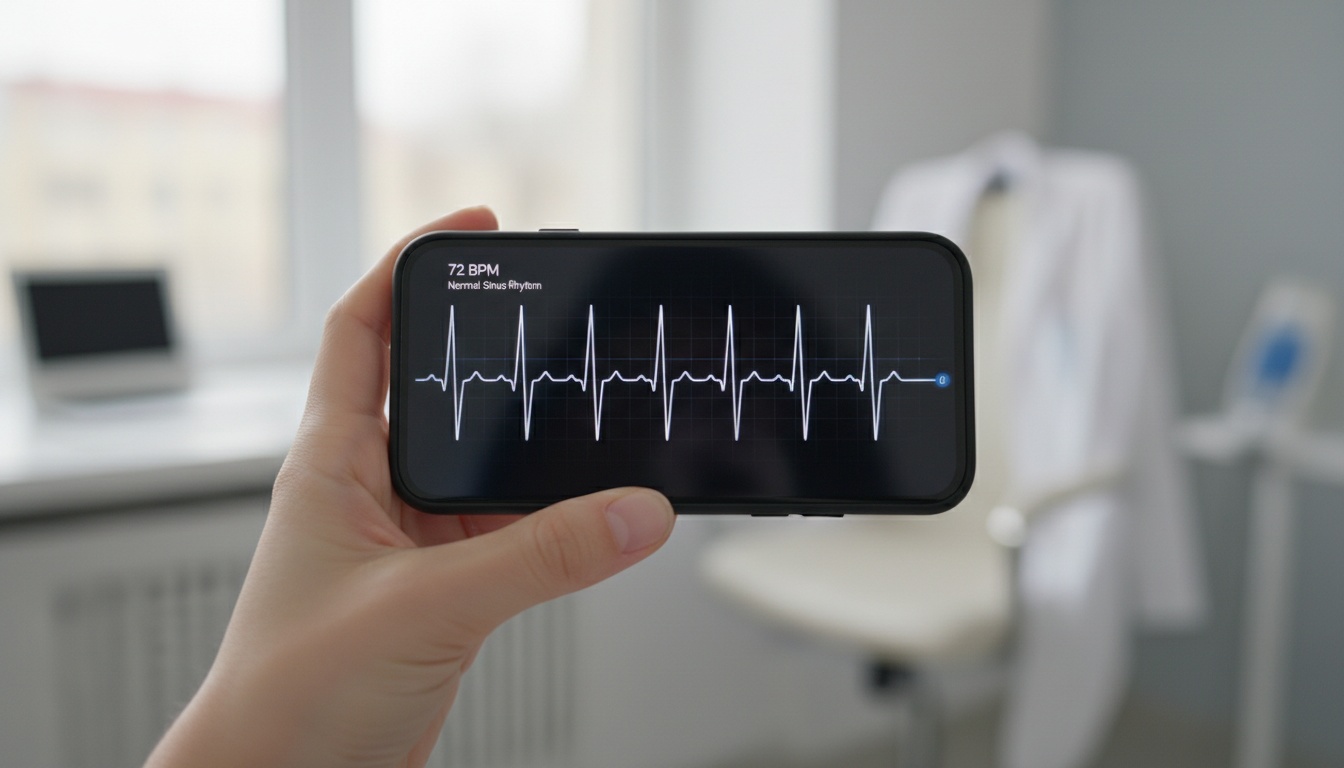
Self-interpretation requires a basic understanding of normal sinus rhythm. You should clearly see distinct P-waves preceding every single QRS complex on the digital display screen. When an app like Apple Watch shows "AFib detected," the algorithm noticed an irregular pattern lacking those distinct P-waves.
An unclassified result means the software could not read it. It is not diagnostic.
If you get an unclassified reading, wipe your wrist and try again. I often see different results on immediate retries simply because I shifted my weight or breathed too heavily.
Turns out, motion artifact ruins readings.
If the app consistently flags AFib, export the PDF and contact your doctor. Never change medications based on an app.
5. Trusting Your Tech: Which ECG Apps Are Backed by Real Clinical Research?
A rapid clinical validation gap persists in this space. While some vendors publish their detection methodology, the vast majority of technology companies do not. Clinical validation separates reliable medical tools from cheap fitness gadgets, relying on massive optical trials and real-world ECG recordings.
According to results published in the New England Journal of Medicine (Perez et al., 2019), the Apple Heart Study enrolled approximately 419,093 participants between 2017 and 2018. It found the watch's optical sensor identified irregular pulse in approximately 0.5% of participants.
Of those who received a subsequent patch monitor, approximately 34% were confirmed to have AFib. These figures are drawn from the published study and should be verified against the original paper for precise context.
Those numbers come from optical sensors, not electrodes.
How These Algorithms Are Built
AliveCor uses neural network-based algorithms trained on real-world ECG recordings; details of the methodology are described in AliveCor's published research, though proprietary specifics are not fully disclosed. Apple states that its ECG app processes data using an on-device model, though the full technical architecture is not publicly documented. Samsung's algorithm involves varying degrees of processing, though the precise architecture is not fully disclosed publicly.
AliveCor's background monitoring feature has received FDA clearance for certain arrhythmia detection indications, adding continuous monitoring capability to its existing on-demand recording. Check AliveCor's current FDA clearance status directly for the latest approved indications, as clearance scope can change.
That distinction matters more than most people realize. Clearance means the FDA found the device substantially equivalent to an already-marketed product, which is a lower bar than full approval.
6. Using ECG Apps Safely: Knowing Their Limits and When to Call Your Doctor
These tools are not diagnostic. They function best as a logging mechanism for vague symptoms so your cardiologist can review them later. Improper electrode placement generates messy waveforms, and severe palpitations require an immediate ER visit, not a smartwatch check.
The gap between theory and practice is real. I learned this the hard way when a cardiac event recorder showed my "arrhythmia" was just a loose smartwatch strap.
Getting that rhythm strip into your doctor's chart is harder than it should be. The liability gap is something most app makers don't advertise. Clinics adopting these tools face significant EHR integration hurdles.
7. ECG Apps vs. Professional ECG Testing & Privacy Compliance
Getting a PDF report from a patient's phone into their official medical chart requires secure HL7 FHIR data pipelines. Liability concerns terrify providers who receive unprompted cardiac data from their patients, making professional 12-lead ECG testing the only legally and clinically definitive option.
Privacy standards dictate how these companies handle your sensitive biological information. Federal HIPAA regulations only apply to entities directly involved in providing traditional professional healthcare delivery services. Standalone consumer applications operate outside these strict federal privacy boundaries.
Check the HHS guidelines on health app privacy.
Check whether the app sells de-identified data to third parties. Review each platform's current privacy policy carefully, as terms and data-sharing practices can change. Healthcare providers must prioritize strict compliance above all else when recommending these specific digital health tools to patients.
Remote ECG monitoring interpretation services may be billable under applicable CPT codes, though applicability and coverage depend on specific clinical context, payer rules, and physician oversight requirements — consult a medical billing specialist for guidance. The catch is, most consumer app data doesn't yet qualify without physician oversight. See the European Medicines Agency guidance on software as a medical device for international context.
8. Key Takeaways
After testing multiple devices and reviewing the clinical literature, here's what actually matters:
- ECG interpreter apps translate raw electrical signals into readable diagnostic waveforms.
- Consumer smartwatches cannot detect heart attacks or complex structural abnormalities.
- Clinical validation separates reliable medical tools from cheap fitness gadgets.
- Privacy policies frequently allow consumer apps to share anonymized health data.
- Always consult a physician instead of relying entirely on software algorithms.
The category is maturing faster than the clinical infrastructure around it. The apps are ahead of the workflows.
Ready to start monitoring? [Find the right ECG interpreter app for your needs.]