 LiveLingo
1. Why Language Barriers Cost You Money on Alibaba — And How to Prevent $2,000+ Losses
Wrong product specifications aren't just inconvenient — they're expensive. I've watched buyers lose thousands on single orders because translation errors turned "waterproof" into "water-resistant" in product specifications.
Tap and speak in English
Tap to start
The hidden costs stack up fast. As of 2024, returns from China typically cost 40-60% of the original product value. Refunds take weeks through Alibaba's dispute system. Lost time means missed launch dates and frustrated customers.
Cultural barriers make language issues worse. Chinese suppliers often say "yes" to avoid conflict, even when they don't understand your requirements. This creates a false sense of agreement that explodes during production.
Actually, the biggest sourcing challenges aren't about finding suppliers — they're about effective communication with them once you do. While templates and translation tools help, real-time voice translation during supplier calls eliminates miscommunication entirely — perfect for complex specification discussions where every detail matters.
Can I Still Order from Alibaba to the USA?
Yes, language barriers don't prevent ordering from Chinese suppliers. But miscommunication turns simple purchases into expensive headaches that could've been avoided with better communication strategies.
2. Alibaba's Built-In Tools (And Why They're Not Enough for Technical Specs)
Alibaba's instant messaging system includes automatic translation features, though results vary. Many buyers don't know these tools exist. The system translates both incoming and outgoing messages in real-time.
Verification badges help identify suppliers with better English capabilities. Gold Supplier badges often indicate suppliers with English-speaking sales teams. Trade Assurance suppliers typically maintain higher communication standards.
In 2024, Alibaba's mobile app handles translation better than desktop. Push notifications include translated previews. Desktop users often miss these features entirely.
Trade Assurance communication goes beyond basic translation. Disputes get handled by bilingual Alibaba staff who understand both technical requirements and cultural context. This matters when specifications get lost in translation.
Here's what I learned the hard way after $50K in mistakes: automated translation works great for basic inquiries. But it fails completely on technical specifications. Use it for initial contact and relationship building, not for detailed product requirements.
Does Alibaba Have Sourcing Agents?
Alibaba offers sourcing services through various programs. These agents typically charge commission but handle all factory communication, quality control, and shipping coordination. They're worth considering for larger orders or complex technical products.
3. Communication Templates That Cut Clarification Cycles in Half
Pre-written templates eliminate most translation errors. Chinese suppliers appreciate structured communication with numbered points and clear action items. Rambling paragraphs get lost in translation. Bullet points don't.
Start every message with your company name and order reference. Chinese suppliers manage hundreds of inquiries daily. Context helps them respond faster.
Initial Contact Template: ``` Hello [Supplier Name],
I am [Your Name] from [Company Name] in [Country].
I am interested in your [Specific Product Name] for import to [Market].
Requirements: • Quantity: [Number] pieces • Target price: $[Amount] per piece • Delivery time: [Timeframe] • Quality standard: [Specific requirement]
Please send:
- Product catalog with specifications
- Price list for different quantities
- Sample availability and cost
Best regards, [Your Name] ```
This works. Suppliers love this format.
Technical specifications need extra structure. Use tables, measurements in metric units, and reference photos whenever possible. "High quality" means nothing. "Meets FDA food grade standards" does.
Follow-up messages should reference previous conversations. Chinese suppliers often have multiple people handling different aspects of your order. Clear references prevent starting over each time.
Essential phrases that Chinese suppliers appreciate include "Thank you for your patience" and "Please confirm your understanding." Politeness matters more in Chinese business culture than aggressive negotiation.
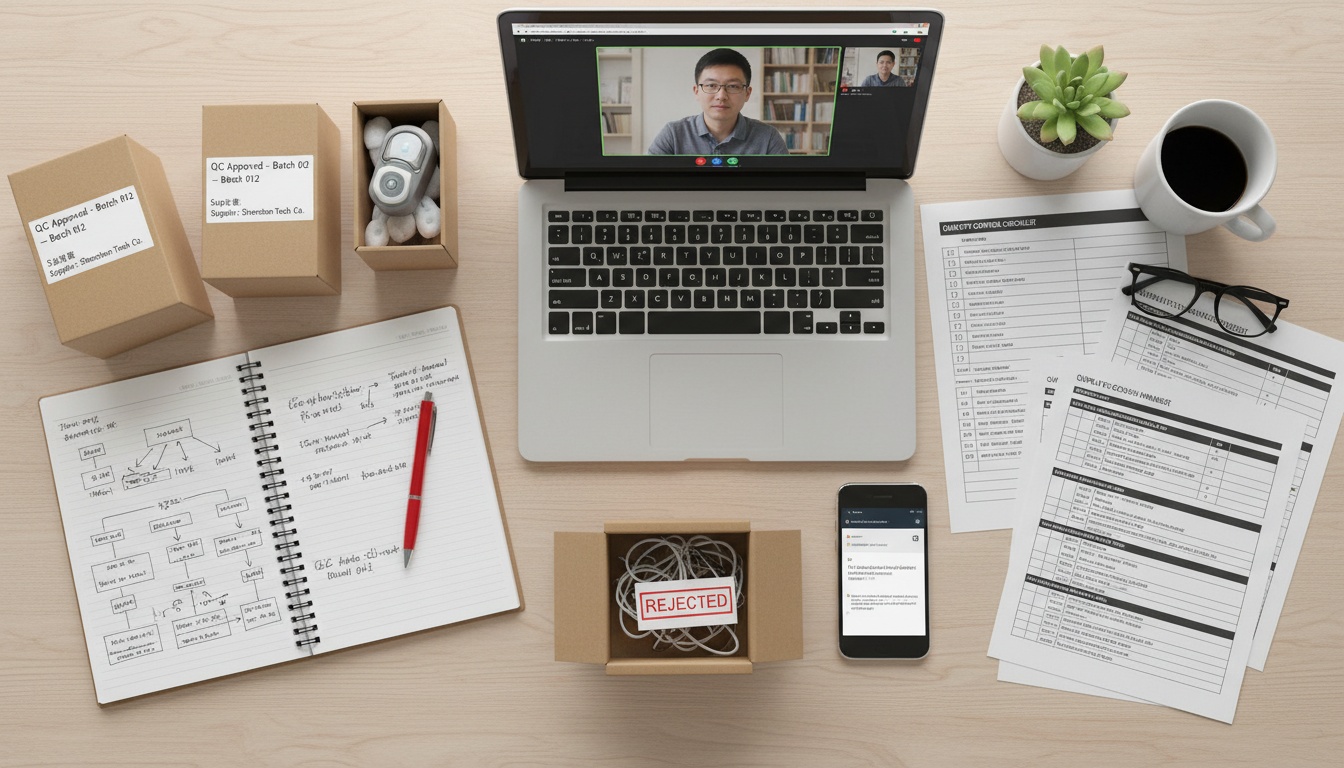
Template Examples for Common Scenarios
Sample Request Template: ``` Dear [Supplier Name],
Please send samples for evaluation:
Product: [Exact name/model] Quantity needed: [Number] samples Shipping address: [Full address] Required arrival date: [Date]
Sample requirements: • [Specific requirement 1] • [Specific requirement 2] • Include product specifications sheet
I will cover sample and shipping costs via PayPal.
Best regards, [Your Name] ```
Simple. Direct. Gets results.
Quality Concern Template: ``` Hello [Supplier Name],
Order #[Number] - Quality Issue Report
Problem: [Specific description] Expected: [What you ordered] Received: [What arrived]
Photos attached showing the difference.
Next steps needed:
- Root cause analysis
- Replacement timeline
- Prevention plan for future orders
Please respond within 24 hours.
Best regards, [Your Name] ```
Templates solve 80% of problems. Here's how to handle the other 20%...
4. When DIY Translation Fails: Why Real-Time Voice Translation Beats Text Tools
Google Translate handles basic Alibaba communication but struggles with technical terms. "Stainless steel 316L" becomes confusing translations that suppliers won't understand.
Industry-specific translation services cost more per document but prevent costly mistakes. Professional translation costs $150-300 per specification document but prevents the $2,000-5,000 average loss from production errors — a 10:1 ROI on complex orders. Medical device specifications, electronics certifications, and food safety requirements need professional translation. Generic tools can't handle regulatory terminology.
Real-time translation apps work for video calls with suppliers. Microsoft Translator and similar tools handle spoken Chinese reasonably well. But video calls should supplement written communication, not replace it.
Here's the contrarian take: automated translation tools work better for relationship building than technical communication. Use them for small talk and relationship maintenance. Hire professionals for specifications and contracts.
DeepL outperforms Google Translate for Chinese-English business communication. The output sounds more natural and preserves context better. It's free for basic use and worth testing for serious sourcing.
But even the best tools can't fix the biggest communication mistake most buyers make...
5. Video Calls with Suppliers: How Real-Time Translation Prevents Misunderstandings
Video calls eliminate many language barriers through visual context. Screen sharing lets you show exactly what you need. Suppliers understand drawings and photos better than written descriptions.
Schedule video calls during Chinese business hours (9 AM - 6 PM Beijing time). Most suppliers prefer WeChat video calls over Skype or Zoom. Test your connection beforehand.
Record important video calls for reference. Many translation apps now work in real-time during video calls. This frustrated me for months until I figured out the right combination of tools and timing.
LiveLingo's real-time translation handles the language barrier so you can focus on specifications and quality standards. Video calls work best when both parties understand each other perfectly.
Prepare visual aids before calls. Product photos, technical drawings, and specification sheets prevent confusion. Point to specific details during calls rather than describing them verbally.
6. When to Hire a Sourcing Agent vs DIY Communication
Sourcing agents typically charge commission but eliminate language barrier risks entirely. For smaller orders, the math rarely works. For larger orders, agents often save money by preventing mistakes.
Red flags that scream "get professional help" include:
• Suppliers asking for clarification on basic requirements • Quality standards varying between samples and production • Shipping delays with unclear explanations • Repeated miscommunication despite multiple attempts
Finding reliable sourcing agents takes work. Check their client references, verify their factory relationships, and test their communication skills during initial consultations. Cheap agents create more problems than they solve.
The hybrid approach works best for experienced buyers. Handle relationship building and basic communication yourself. Bring in agents for complex negotiations, quality audits, and factory inspections.
What to expect from sourcing agents: daily factory communication during production, quality control photos, shipping coordination, and dispute resolution. What to handle yourself: product research, supplier selection, and long-term relationship building.
Professional bilingual sourcing eliminates most communication challenges but adds cost and reduces your direct supplier relationships. The trade-off makes sense for complex products or high-value orders.
Can I Source Products from Alibaba Without an Agent?
Absolutely. Most successful Alibaba buyers handle communication directly. Start with simple products, build your communication skills gradually, and bring in agents only for complex projects or when problems arise.
7. Post-Sourcing Documentation Best Practices
Document every conversation immediately after it happens. Screenshots fade from memory. Written summaries don't.
Create a communication log for each supplier relationship. Track who you spoke with, what was discussed, and what follow-up actions were agreed upon. Chinese suppliers often have multiple people handling different aspects of your order.
Save all WeChat conversations and email threads. Alibaba's dispute system requires detailed communication records. Missing documentation weakens your position in quality disputes.
Translate and save important documents in both languages. Keep Chinese versions for supplier reference and English versions for your records. This prevents "lost in translation" excuses during disputes.
8. 3 Costly Language Barrier Mistakes (And the Communication Tools That Prevent Them)
Case Study: The Packaging Disaster
An electronics accessories importer ordered phone cases with "premium packaging." The supplier understood "premium" as "expensive" and used luxury boxes that doubled shipping weight. Air freight costs jumped from $800 to $1,600.
Resolution: The buyer created a packaging specification sheet with photos, dimensions, and weight limits. Future orders included maximum packaging costs in the purchase agreement.
Case Study: Color Specification Gone Wrong
"Navy blue" became "dark blue" in translation, then "black-blue" in production. A clothing retailer's 5,000 T-shirts arrived in the wrong color two weeks before a trade show.
Resolution: Pantone color codes eliminate color confusion. Always specify exact color numbers, not descriptive names. Suppliers understand "Pantone 19-4052 TPX" perfectly.
Case Study: Quality Standards Mismatch
A supplier agreed to "commercial grade" plastic components but delivered "industrial grade" parts that failed safety testing. The buyer faced $3,200 in testing costs and product recalls.
Resolution: Define quality standards with specific test methods and acceptance criteria. "Meets ASTM D638 tensile strength requirements" prevents interpretation errors.
Warning signs that communication is breaking down include: delayed responses to simple questions, suppliers asking for the same information repeatedly, or quality declining between samples and production orders.
Recovery from major miscommunications requires patience and documentation. Screenshot all conversations, maintain detailed email records, and escalate through Alibaba's Trade Assurance system when suppliers become unresponsive.
The key lesson? Most language barrier problems stem from assumptions, not translation errors. Clear documentation and structured communication prevent most sourcing disasters.
9. Step-by-Step Process for Escalating Communication Issues
Start with direct supplier communication through multiple channels. Try Alibaba messaging, email, and WeChat if available. Different team members may respond to different platforms.
Document the communication breakdown clearly. List specific questions asked, responses received, and timeline of events. Alibaba's support team needs detailed records to help effectively.
Use Alibaba's Trade Assurance dispute system for order-related communication failures. The platform provides bilingual mediation services for serious disputes.
Consider hiring a local sourcing agent for urgent communication issues. They can make phone calls and visit factories when digital communication fails completely.
Escalate to Alibaba's customer service as a last resort. They can contact suppliers directly and provide translation assistance for critical order issues.
10. Red Flags for Language Barrier Problems
Suppliers who consistently misunderstand basic requirements despite multiple explanations. This indicates fundamental communication gaps that won't improve without intervention.
Quality samples that don't match written specifications exactly. If suppliers can't execute simple sample orders correctly, production orders will have bigger problems.
Shipping delays with vague explanations like "factory busy" or "material problem." Legitimate delays come with specific timelines and solutions.
Suppliers asking for the same information repeatedly in different conversations. This suggests poor internal communication or inadequate English comprehension.
Responses that don't address your specific questions. Generic replies indicate suppliers aren't understanding your actual requirements.
11. Key Takeaways
- Use Alibaba's built-in translation for relationship building, but hire professionals for technical specifications and contracts
- Structured communication templates with bullet points and numbered lists prevent most translation errors
- Professional translation costs $150-300 per project but prevents $2,000-5,000 losses from failed orders
- Sourcing agents make financial sense for larger orders or complex technical products
- Document everything and use specific standards (Pantone colors, ASTM specifications) instead of descriptive language
- Video calls with visual aids eliminate many language barriers for complex projects
- Post-sourcing documentation prevents "lost in translation" excuses during disputes
Ready to eliminate language barriers from your Alibaba sourcing? Try LiveLingo free — 5 minutes of real-time voice translation every day, no credit card required. Perfect for supplier calls, video negotiations, and complex product discussions.
Talk to Alibaba Suppliers Without Translation Mistakes
Specification calls with Chinese suppliers don't need to cost $1.25-$4.95/min for interpreters. LiveLingo gives you real-time voice translation for WhatsApp and phone calls at $0.07/min, so you can negotiate MOQs, clarify tolerances, and confirm production details without miscommunication eating your margins.
Start Free Supplier Calls